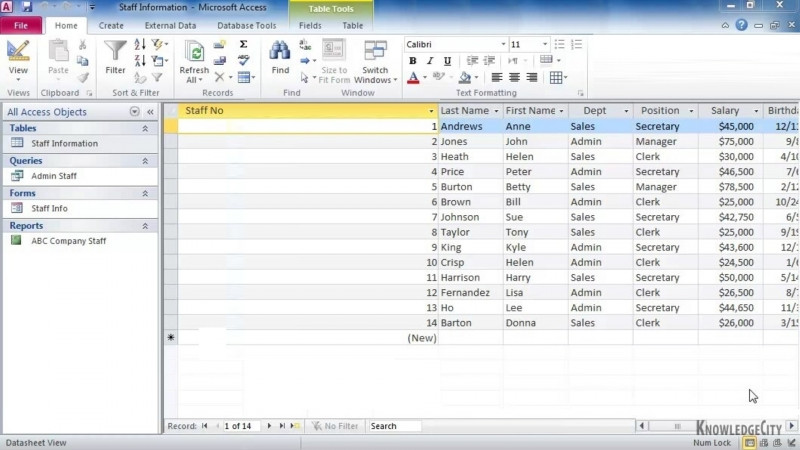
Hello, my name is John Varon, and in these lessons, you will learn about hidden objects. In this lesson, I will show you what hidden objects are and how to know when to use and not use them. Hidden objects are just normal Microsoft Access database objects which are temporarily not visible. All of the database objects that show up in the navigation pane can be hidden. To do so, simply right -click on the item and choose hide. This will remove it from the navigation pane view. In order to show the hidden object again, right -click somewhere else in the navigation pane and choose navigation options. In this options window, select the checkbox that says show hidden objects and click OK. Previously hidden objects will now show up, but they will be lighter and faded. You can now right -click on one of those and choose unhide. You can also use the same method to hide and unhide entire groups. When you're done, if you want, you can go back and uncheck show hidden objects or you can leave it on. It just depends what you prefer seeing. There are several reasons why you may want to hide objects in the database, but first let me talk about a couple of reasons why you should not use hidden objects. Security and authorization. Security refers to hiding sensitive information. If your database has potentially sensitive information, such as social security numbers, simply hiding the tables where they are stored is not the correct way to handle it since anyone could just unhide those tables. There are much better and more secure ways to deal with sensitive data. Authorization has to do with controlling who has access to which information. If users are not supposed to have access to certain tables, you cannot simply hide the tables from them. There isn't a simple solution to this in Microsoft Access, but there are some possible workarounds. As to why you should use hidden objects, there are multiple scenarios where they can be useful. The simplest reason is for organizational purposes. If you have some tables that users do not need to see or use, you can hide them. Or if you have a lot of database objects while you're designing and developing the database, showing and hiding certain subsets as you work can keep things organized. Another reason to hide objects can be for administrative purposes. If some of the database objects are not relevant for end users and exist only for administrative purposes, they can be hidden most of the time and only unhidden when you need to use them. Keeping users from getting confused or overwhelmed can be another valid reason for hiding database objects. If your database is designed or structured in such a way that there are a lot of intermediate objects but users only work with the end result objects, then all of the intermediate database objects could potentially be hidden. A final situation for using hidden objects is actually the reverse of the others. It has to do with objects that are normally hidden but that you may want to unhide at certain times. Microsoft Access has certain tables called system tables, which are tables created and maintained by Microsoft Access itself. These are not tables that you would normally have to worry about at all. In fact, you normally can't even see them. They maintain information about the database itself. For example, there's a table that holds the name and information about all of the tables you create in the database. If you ever need or want to look at these tables, you would go to the navigation options like before and check show system objects. They'll show up looking like hidden tables with a faded light gray and they will all start with m sys. And then feel free to open and look at them. Some of the information in here can look fairly cryptic. However, make sure you never change the data in these tables. Thanks for watching. Stay tuned for the next lesson where I will show you about hidden forms.