Enjoying the preview?
This is the free first lesson. Get full access — request a demo or sign in.
Enjoying the preview?
This is the free first lesson. Get full access — request a demo or sign in.
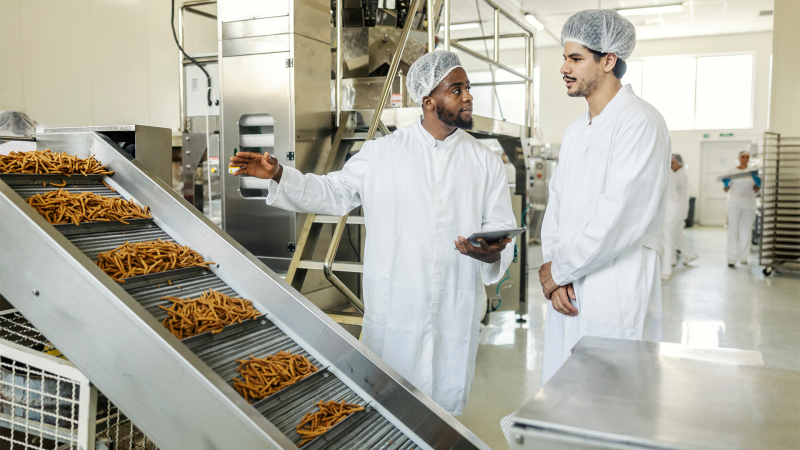
When you work in a food handling facility, you have a responsibility to create products that people can enjoy. Without proper precautions, you might end up exposing the food you’re working with to harmful bacteria. This can not only hurt your business but can make your customers seriously ill. That’s why the US Food and Drug Administration (FDA) has developed current good manufacturing practices for the industry—benchmarks that businesses must meet to help reduce the risk of food contamination.
In this course, you’ll learn about the US FDA’s current regulation that requires every facility that processes or handles food to create GMPs that can help protect food in all levels of their operations. This regulation is organized into seven groups, the last four of which are covered in these lessons and address Sanitary Facilities and Controls, Equipment and Utensils, Manufacturing Processes and Controls, and Warehousing and Distribution.
These lessons will identify criteria for providing a contamination-free environment by maintaining the condition of the water in your facility, the equipment and utensils you work with, the environment in which the food is kept, and the manufacturing operations themselves. The GMPs for Sanitary Facilities and Controls cover keeping an adequate supply of good quality water and keeping the plumbing system in good working order. They also establish criteria for hand washing, toilet facilities, and waste disposal. The GMPs addressing Equipment and Utensils establish ways to use, clean, and store the utensils and keep equipment working well. The Manufacturing Processes and Controls GMPs address sanitation, quality control testing, food storage, raw materials, other ingredients, and operations such as processing, packaging, and storing food. The final GMPs cover Warehousing and Distribution by providing criteria for transporting and storing food products that keep them safe from contamination.
It is for people who work in a food handling facility and have a responsibility to create products that people can safely enjoy.
It covers the last four of the seven groups in the FDA regulation: Sanitary Facilities and Controls, Equipment and Utensils, Manufacturing Processes and Controls, and Warehousing and Distribution.
The course addresses current Good Manufacturing Practices (cGMPs), Food Manufacturing, Food Safety Management Systems, Good Manufacturing Practices, and Process Safety.
They address sanitation, quality control testing, food storage, raw materials, other ingredients, and operations such as processing, packaging, and storing food.
The US FDA developed current good manufacturing practices as benchmarks businesses must meet to help reduce the risk of food contamination, which can hurt a business and make customers seriously ill.