Enjoying the preview?
This is the free first lesson. Get full access — request a demo or sign in.
Enjoying the preview?
This is the free first lesson. Get full access — request a demo or sign in.
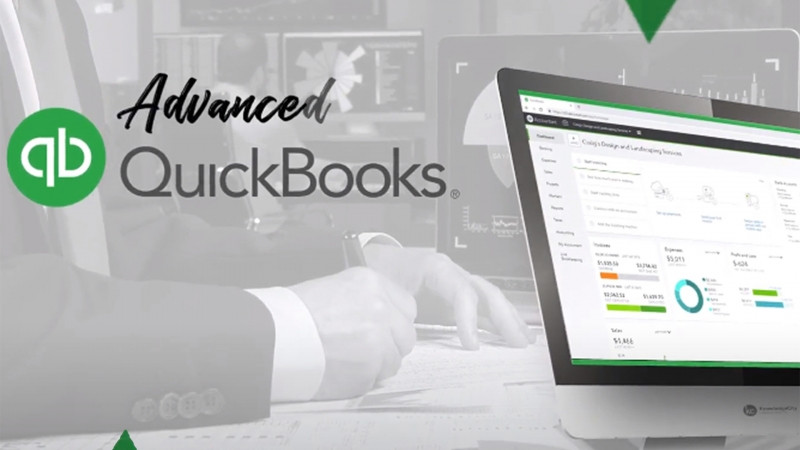
Intuit QuickBooks is one of the leading accounting software packages available in the consumer market. It is used by large and small businesses, schools, nonprofit organizations, and government entities to manage and track daily financial operations. It helps with various tasks, including accounting, inventory, invoicing, bank account tracking, expense management, and budgeting. So, how can you use QuickBooks in your organization?
In this course, you will learn how to invoice customers, enter vendor bills, create an estimate, convert it to an invoice, and convert a vendor purchase order to a bill for payment. You will also learn how to manage other customer transactions, such as entering deposits and payments, creating receipts, and generating customer statements to communicate open balances and activity on the account.
We will cover how to void and write off invoices, match bank data using bank integrations, and complete bank reconciliations. We will explore making products and services inactive, managing e-commerce applications, and managing independent contractors for year-end tax reporting. By the end of this course, you will be able to manage transactions in a QBO file effectively.
You will learn how to invoice customers, enter vendor bills, create an estimate and convert it to an invoice, convert a vendor purchase order to a bill, manage customer transactions, void and write off invoices, match bank data using bank integrations, complete bank reconciliations, manage e-commerce applications, and manage independent contractors for year-end tax reporting.
QuickBooks is one of the leading accounting software packages used by large and small businesses, schools, nonprofit organizations, and government entities to manage and track daily financial operations, including accounting, inventory, invoicing, bank account tracking, expense management, and budgeting.
Yes. The course covers connecting bank accounts, manually entering bank activity, matching bank data using bank integrations, adding, matching, transferring, and excluding transactions, and reconciling accounts, so you can manage bank activity with and without app integrations.
Yes. The course covers tracking independent contractor activity, including adding 1099-eligible contractors to your QBO file, identifying and tracking 1099-eligible accounts, and running 1099 reports for year-end tax reporting.