Enjoying the preview?
This is the free first lesson. Get full access — request a demo or sign in.
Enjoying the preview?
This is the free first lesson. Get full access — request a demo or sign in.
There are more than 3,000 office fires per year in the United States. That's why it's important to know who to identify fire hazards around your office. This course will teach you how to prevent and react to an office fire.Three elements need to exist for fires to burn: Fuel, Oxygen and Heat. If you take one of these away, the fire will not burn. And all of these elements exist in the office.
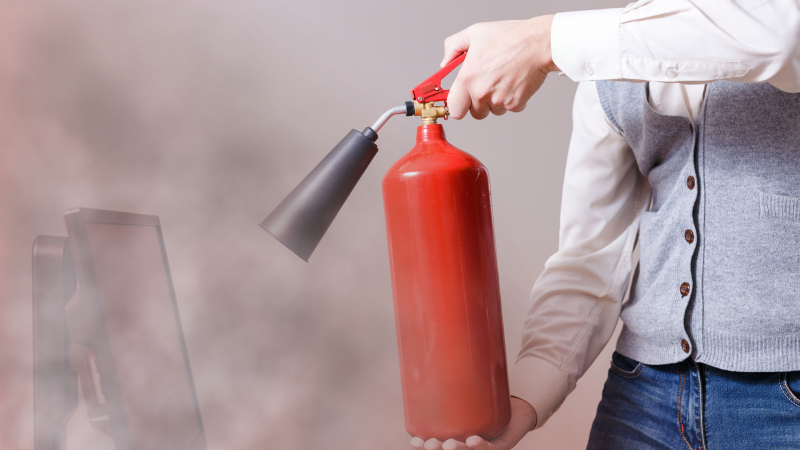
If a fire does start in the office, it’s important to know what is burning. All fire extinguishers will not put out every fire. Using the wrong type of fire extinguisher may only make the fire worse. This course will explain the different classes of fires and how each can be extinguished.
In addition to fighting fires, it’s important to prevent them from starting in the office. This includes paying attention to how and where electronics are plugged in. Overloading circuits can result in unexpected fires.
This course teaches how to prevent and react to an office fire. It covers how fires burn, the four classes of fire and how each can be extinguished, preventing office fires, and dealing with a fire emergency.
Not all fire extinguishers will put out every fire, and using the wrong type may only make the fire worse, so the course explains the different classes of fires and how each can be extinguished.
In addition to fighting fires, the course covers preventing them from starting, including paying attention to how and where electronics are plugged in, since overloading circuits can result in unexpected fires.
The course covers fire and life safety, fire hazard analysis, fire protection, fire prevention, fire modeling, and fire safety.
The course is organized into lessons covering an Introduction, How Fires Burn, Four Classes of Fire, Extinguishing Fires, Preventing Office Fires, Dealing with a Fire Emergency, and a Conclusion.