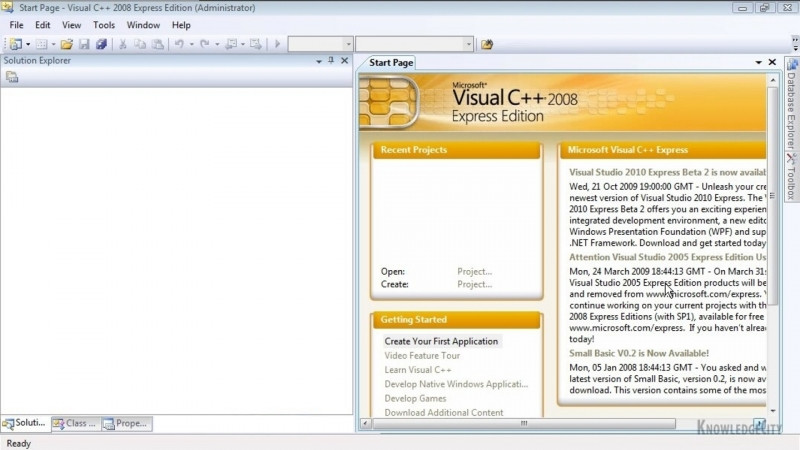
Hello again. In this last time we're gonna start discussing key database concepts. To do this, we're gonna use our newly installed SQL server to discuss the benefits of organized data. We talked about how organizing data and using a database to access the data is beneficial because it makes it easier to access the data and it's faster to access and modify it. But we're gonna dig into our software now so you can see the benefits for yourself. So the default install went to your program files and it'll be in your windows menu. And here's the actual File Explorer structure. So this is program files, X86. And you can see Microsoft SQL server here and SQL Server Management Studio 18. So we're gonna click on that SQL Server Management Studio since that's where we'll be doing all our work. And we go to the Common7. And we can go to IDE. We'll just scroll down and you can see this Ssms file. And that's the executable. There's another one here, but that's just the icon. If you do the mouse over, you can see it says name type is, or item type is icon. Right-click on the Ssms file. And you can have your, you can pin it to your start or whatever for the future, but just gonna double click that. It's gonna open up the SQL Server Management Studio. And now it brings us Connect to Server and we're gonna use all the defaults here. So it's a database engine. Server name is just your desk, whatever your PC name is, and we're just gonna stick with windows authentication for right now. We'll get into that stuff further down the road but it does bring up a good point. Another benefit of putting your data in a database is security. So you can assign different user names and roles that can actually access the database, where a note like a notepad file would just be out there for anybody to use. So we're just gonna connect and you can see we have databases right here. Security, Server Objects, Replication, PolyBase, some other stuff. We're gonna focus just on databases for now. Click on that. You can see more system databases. And the default install has master, model, and msdb. I did create a tempdb already and added some data into it for this tutorial, for a later tutorial actually. I go to this tempdb that I created. You can see, I made a table test. And from here I can go to design and you can see how I created it. And I used those field names that we talked about in the text file from before and I assigned data types. And we'll go over all that later. And from here, you can actually do a select top 1000 rows. And that's basically created, that's using a query which it shows here to access 10, the top 1000 records. But obviously I only have like 11 records here. So you can see some of those files that we'd used before, the Address, TV, and Age. We were talking about how we could access data quicker. So you see how quick that pulled that up. And you could modify this built inquiry even. You could just want the top five and execute it and it'll give me the five. Close this out. I don't wanna save that. Now, if I wanted to create a whole new query we can do it ourself manually as well. And just go up here and click execute. And it gives us the same results. So before we kind of talked about creating useful information and how that could be difficult in a large data set, but with the system that we have here we can just build a query that might help with that. Now let's say I wanna know everyone that watched football that night. And I can find that out pretty quickly. You can take our original query here. That's a simple where statement. I don't expect anybody to know this right away. We'll go over the syntax later. So this is basically just saying, find everything in the TV column with the name like, Football. We go up here and execute this and it brings up five records of the people that had watched football that evening. So we now know their age they watch football, their address. And obviously it would be a bigger database. So we'd probably have their name and all that. But as you can see it just gives us this information much quicker than manually searching through records. That's a good place to stop. And in the next lesson I'm gonna show you how to build your own database and then we can focus on tables.